
Views: 0 Author: Site Editor Publish Time: 2026-10-13 Origin: Site


Rusted nuts cost industrial plants millions in daily downtime. Imagine a maintenance crew forced to halt a critical chemical process. Why? A seized piece of standard hardware refuses to budge at 2 AM. Harsh chemicals and volatile atmospheres destroy unprotected steel rapidly. Consequently, this degradation causes dangerous flange leaks, structural vulnerabilities, and expensive turnaround delays.
Upgrading to specialized coated hardware eliminates this hidden operational liability. In this comprehensive guide, we will explore the material science, operational benefits, and exact specifications required to optimize plant infrastructure and drastically reduce maintenance headaches. Stop letting seized bolts dictate your maintenance schedule.
Superior Lifespan: Coated fasteners typically endure thousands of hours in standardized salt spray testing without exhibiting red rust.
Predictable Friction: A consistent, low friction coefficient known as the K-factor ensures precise installation and actively prevents thread galling.
Color-Coded Safety: Industrial pigments such as red, blue, and green assist plant engineers in quickly identifying specific coating formulas or material grades on the field.
High Return on Investment: While carrying a slightly higher initial procurement cost, coated hardware drastically reduces maintenance downtime and replacement frequency.
Coating Variations: Understanding the technical distinction between generic fluoropolymers and branded solutions is crucial for specific industrial applications.
To make informed engineering decisions for industrial plants, it is essential to grasp the material science behind advanced fastener treatments. Standard carbon steel or even stainless steel hardware often fails prematurely when exposed to aggressive industrial environments. Applying a specialized fluoropolymer layer completely changes the surface dynamics of the metal.
PTFE stands for Polytetrafluoroethylene, a highly resilient synthetic fluoropolymer. From a chemical perspective, it features multiple carbon-fluorine bonds. These rank among the strongest single bonds in organic chemistry. This dense molecular structure renders the material highly non-reactive, non-stick, and hydrophobic.
When applied to industrial hardware, a teflon fastener benefits from these exact properties. Teflon is a widely recognized trademark for PTFE. The cured film acts as a permanent dry lubricant and an impenetrable physical barrier. Because the material is chemically inert, it actively repels water, resists aggressive acids, and prevents corrosive media from ever reaching the vulnerable steel substrate beneath.
A frequent point of confusion during procurement is the distinction between standard PTFE and branded alternatives. While PTFE serves as the foundational chemical compound, a xylan coating is a highly specific, proprietary formulation originally developed for heavy industry.
Generic PTFE provides excellent lubricity and chemical resistance. However, it is fundamentally a soft material that can sometimes struggle with adhesion under extreme mechanical stress. Xylan formulations solve this engineering challenge by blending fluoropolymers with robust organic binder resins. These specialized binders significantly enhance the film adhesion to metal, its resistance to abrasion, and its overall survival rate during the violent, high-torque wrenching processes required in modern refineries.
Specifying the correct fastening hardware is a critical safety and operational mandate. The transition from bare metal to polymer-treated fasteners is driven by empirical data and harsh field realities. Here are the primary technical reasons facilities adopt this technology.
In chemical processing, moisture and caustic agents constantly attack exposed joints. Fluoropolymer films serve as an impenetrable dielectric barrier, stopping the electrochemical reactions that cause oxidation. In controlled laboratory environments, high-quality coated nuts routinely exceed 3,000 hours in ASTM B117 salt spray testing before showing any signs of substrate rust. This barrier protection exponentially extends the operational lifespan of critical flange connections.
One of the most valuable attributes of a ptfe coated nut is its inherent slipperiness. The coefficient of friction is exceptionally low, often hovering between 0.05 and 0.10. During the initial installation make-up phase, this allows for a smooth, highly uniform transfer of torque into clamping force. More importantly, during maintenance break-out years later, technicians can remove the nuts effortlessly with standard hand tools. This completely eliminates the need for hazardous hot-bolting, dangerous torching, or destructive mechanical nut-splitting.
Thread galling, frequently referred to as cold welding, is a severe mechanical failure when tightening fasteners under high pressure. It is particularly notorious with stainless steel or alloy hardware. Galling occurs when friction destroys the protective oxide layer on the metal, causing the threads to literally fuse together. The applied polymer layer acts as a permanent, solid dry-film lubricant that physically separates the male and female threads. This effectively eliminates metal-to-metal contact and stops galling in its tracks.
Industrial operations rarely occur in mild conditions. Advanced polymer formulations are engineered to remain stable across a punishing spectrum of temperatures. They typically function reliably from -50 degrees up to +260 degrees Celsius or -58 degrees to +500 degrees Fahrenheit. Furthermore, the barrier is highly resistant to a wide array of caustic chemicals, including sulfuric acid, hydrochloric acid, and strong alkalis.
From a purely financial perspective, the slightly higher initial procurement cost of treated hardware is quickly offset by dramatic reductions in maintenance labor. When a standard nut seizes on a critical pipeline, maintenance teams may spend hours cutting it off, leading to extended, costly plant downtime. Treated fasteners guarantee rapid, predictable disassembly.
Recent market analyses highlight a significant shift in maintenance strategies across the petrochemical and offshore sectors. Driven by stricter environmental regulations regarding fugitive emissions and a push to extend maintenance turnaround intervals, specifying advanced fluoropolymer coatings is rapidly becoming the baseline engineering standard. Facilities are actively moving away from raw carbon steel to minimize the severe safety risks associated with unplanned shutdowns and hazardous extraction methods. Predictive maintenance now demands predictable hardware.
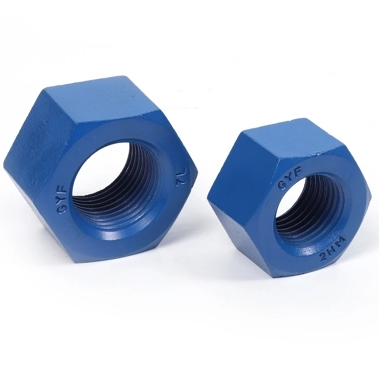
The field performance of a treated fastener relies entirely on the precision of its manufacturing process. A hastily applied film will flake off the moment a hydraulic wrench engages it, rendering the entire investment useless.
Before a single drop of polymer touches the metal, rigorous surface preparation must occur. Technicians thoroughly degrease the base nuts, commonly Carbon Steel ASTM A194 Grade 2H or stainless variants, to strip away machining oils. Next, the hardware undergoes aggressive abrasive grit blasting to create a microscopic surface profile, often called a white metal finish. Following this, a chemical conversion coating is applied, typically a zinc or manganese phosphate base coat. This crucial phosphate layer provides sacrificial corrosion protection and acts as a porous, textured primer that the topcoat can mechanically bite into.
Once the foundation is perfectly prepped, the liquid fluoropolymer dispersion is applied using electrostatic spray techniques. This ensures uniform, microscopic coverage over the complex geometry of the internal threads. The hardware is then transferred to heavy-duty industrial ovens for thermal curing. During this baking cycle, which reaches temperatures between 200 degrees and 400 degrees Celsius, carrier solvents evaporate and the resin binders cross-link. This intense thermal bonding fuses the polymer to the phosphate base, creating a resilient armor capable of withstanding heavy impacts.
Walk into any modern petrochemical facility, and you will immediately notice that the pipeline fasteners are highly colorful. This pigmentation is far from decorative. It serves as a critical component of industrial visual management.
Vibrant pigments are intentionally mixed into the liquid formulations to help engineers, safety inspectors, and maintenance crews instantly identify the specifications of the hardware installed on a pressure vessel. This immediate visual confirmation ensures that the correct material grade and chemical resistance type have been deployed, drastically minimizing the risk of catastrophic installation errors.
While color coding can be customized to meet specific corporate facility standards, the heavy industry sector generally adheres to recognized conventions:
Coating Color | Typical Application and Industry Meaning | Common Base Material |
|---|---|---|
Red | High-temperature applications, specific chemical lines, or standard carbon steel applications. | ASTM A194 Grade 2H |
Blue | Offshore oil and gas, marine environments, or to indicate stainless steel base materials. | ASTM A194 Grade 8 or 8M |
Green | Water treatment facilities, wastewater management, or specific branded grades such as Xylan 1070. | Various Alloys |
For mechanical engineers and procurement specialists, transitioning to polymer-treated fasteners requires a strict, mandatory review of installation procedures, particularly regarding torque calculations. You cannot treat a coated bolt the same way you treat bare metal.
The most critical technical adjustment involves the friction coefficient. Standard, unlubricated carbon steel nuts typically exhibit a K-factor of around 0.20. Because fluoropolymers are inherently self-lubricating, their K-factor drops significantly, usually landing between 0.10 and 0.14.
If an unaware maintenance technician applies a standard unlubricated torque value to a treated nut, the severe lack of friction will cause the bolt to stretch far beyond its intended yield point. This oversight frequently leads to immediate mechanical shearing or dangerous flange leakage. Consequently, plant procedures must be updated to utilize modified torque charts specifically calibrated for low-friction surfaces.
Treated nuts must still adhere to rigorous metallurgical standards beneath their colorful exterior. The surface treatment process does not alter the underlying mechanical yield strength of the base steel. Real-world parameters dictate that a standard Heavy Hex Nut ASTM A194 Grade 2H maintains its immense tensile load capacity even after coating. Furthermore, because the applied film is exceptionally thin, usually around 1 mil or 25 microns, standard thread sizes from half-inch up to four inches remain perfectly unaffected. There is no need for special oversized tapping.
To maintain an objective engineering perspective, it is necessary to evaluate both the distinct strengths and the practical limitations of this technology.
The primary advantages revolve around unmatched operational reliability. These components provide stellar chemical resistance, absolutely prevent thread galling, and guarantee predictable disassembly. Moreover, they are highly reusable. As long as the film remains intact and the threads pass a standard visual inspection, they can be re-torqued during multiple maintenance cycles. This drastically lowers the total cost of ownership over a decade.
Despite their incredible versatility, these solutions are not universally applicable. The most prominent limitation is thermal degradation. If the operating environment continuously exceeds 260 degrees Celsius or 500 degrees Fahrenheit, the polymer compounds will begin to soften, outgas, and eventually burn off entirely, leaving the bare metal exposed to the elements. In addition, while resin binders improve durability, the film remains relatively soft compared to hard metallic plating. In applications involving severe abrasive wear or heavy physical impact, a harder metallic barrier may be more appropriate.
Certain industrial sectors face environmental challenges so severe that standard hardware is universally considered an unacceptable operational risk.
In sprawling refineries, atmospheric exposure to volatile organic compounds, sulfuric acid, and caustic sodas is a daily reality. Treated hardware is heavily deployed on heat exchangers, reactor vessels, and pipe flanges to prevent acid-induced stress corrosion cracking. This ensures that critical joints can be serviced swiftly and safely during highly choreographed planned turnarounds.
Marine environments are uniquely destructive. The relentless combination of continuous saltwater spray, high humidity, and UV exposure causes rapid localized pitting and galvanic corrosion in unprotected steel. On offshore rigs, subsea manifolds, and splash-zone equipment, these fasteners provide the necessary dielectric barrier to completely isolate the hardware from the highly conductive, aggressive saline environment.
Wastewater plants constantly expose infrastructure to hydrogen sulfide gas, liquid chlorine, and perpetual moisture. These harsh elements cause rapid oxidation and severe metal embrittlement. Green-pigmented hardware is frequently specified for valves, pumps, and flange connections in these facilities to ensure long-term structural integrity and prevent catastrophic municipal water contamination.
Selecting the appropriate fastening hardware is a critical engineering decision that directly impacts safety, maintenance budgets, and overall plant uptime. Relying on guesswork or outdated procurement habits can lead to premature failure. The process requires a systematic balance of mechanical load requirements, environmental resistance, and supply chain reliability.
No two industrial plants operate under identical conditions. To ensure the selected hardware performs flawlessly, engineers must evaluate three primary variables:
Chemical Media Exposure: Identify the specific acids, bases, or airborne chlorides present. Facilities handling hydrochloric acid require coatings with exceptional chemical inertness, whereas offshore platforms need maximum resistance to chloride-induced pitting.
Operating Temperature Ranges: Ensure the continuous ambient or surface temperature does not exceed the thermal threshold of the polymer. For extreme high-heat exhaust flanges, alternative specialized alloys must be considered.
System Pressure and Mechanical Load: Remember that the film does not dictate mechanical strength. High-pressure piping systems still require robust base materials like Grade 2H heavy hex nuts to handle immense tensile loads safely.
Understanding your environmental requirements is only the first half of the equation. Sourcing a corrosion resistant nut from a competent, quality-driven manufacturer is equally vital. Even the most advanced chemical formulation will fail prematurely if applied to an improperly prepared surface.
Procurement teams should rigorously evaluate suppliers based on their quality assurance protocols. A reputable manufacturer will strictly adhere to documented surface preparation standards, including proper grit blasting and phosphate priming. They must utilize calibrated ovens for precise thermal curing to prevent brittle or soft finishes. Finally, insist on comprehensive material traceability. Reliable suppliers always provide Material Test Reports known as MTRs for the base metal and Coating Certificates of Compliance to guarantee the integrity of your plant infrastructure.
Standard fasteners consistently fail in harsh, corrosive processing plants. This inevitable degradation causes dangerous chemical leaks, structural compromises, and wildly expensive downtime. Upgrading to advanced fluoropolymer-treated nuts solves this pervasive industry problem.
By offering an exceptionally low friction coefficient and stopping severe rust in its tracks, quality coated hardware keeps your operations running safely and efficiently. They drastically reduce long-term maintenance costs and prevent sudden, catastrophic joint failures. Evaluate your specific plant conditions carefully, partner with a certified manufacturer, and upgrade your critical infrastructure today to secure a safer operational future.
Ready to eliminate seized bolts and optimize your plant maintenance turnaround? Choose the right industrial hardware tailored to your specific corrosive environment. Visit https://www.ngyfastener.com to explore a comprehensive catalog of premium coated fasteners, review detailed technical specifications, and find the exact product grades that match your facility safety requirements.
Yes, in the vast majority of practical maintenance scenarios, they can be safely removed and reused. The primary mechanism that prevents standard bare metal fasteners from being reused is thread galling and severe oxidative corrosion, which essentially welds the nut to the bolt over time. Because the polymer film provides a chemically inert barrier and acts as a continuous dry lubricant, it prevents metal-to-metal contact during both installation and removal. This ensures a smooth, non-destructive breakout. However, reuse is always contingent on a thorough visual inspection by a qualified technician to verify the base threads have not yielded and the film remains largely intact.
No, a high-quality formulation will not chip, flake, or peel off during normal handling and installation, provided it was applied correctly by a certified manufacturer. The durability of the film is entirely dependent on the meticulous surface preparation and thermal curing process. When the base metal is properly degreased, grit-blasted to achieve the correct anchor profile, and treated with a phosphate primer, the resins form a robust mechanical bond. Standard tightening procedures using calibrated torque wrenches or hydraulic tensioners will not compromise a properly manufactured surface.
Generally, you should never apply wet anti-seize pastes, copper grease, or oil-based lubricants to these specialized fasteners. The surface is specifically engineered to function as a highly efficient, standalone dry film lubricant. It inherently possesses a very low and predictable friction coefficient. The engineering calculations used to determine the correct torque values are based strictly on this dry, lubricated state. Introducing an additional wet lubricant drastically alters the friction dynamics, which will result in severe over-torquing, potentially stretching the bolt beyond its yield point or crushing the vital flange gasket.
Both options are designed to prevent rust, but they operate on fundamentally different chemical and mechanical principles. Hot-Dip Galvanizing known as HDG involves submerging the steel in molten zinc, creating a thick, sacrificial metallic layer. While HDG provides rugged protection against general atmospheric rust, the thick zinc layer often requires the nut threads to be over-tapped, and the rough surface is highly prone to galling. In contrast, fluoropolymer films offer vastly superior chemical resistance to aggressive acids and alkalis. The polymer film is applied much thinner and more uniformly, maintaining standard thread tolerances while entirely eliminating the risk of galling without the need for messy wet lubricants.
In highly corrosive marine or offshore environments, high-quality fluoropolymer coatings drastically outperform standard hardware. When properly applied over a robust phosphate or zinc-rich primer base, these fasteners routinely withstand over 3,000 to 4,000 hours in accelerated salt spray testing without showing red rust. In real-world offshore applications, this translates to years of reliable service in the splash zone, ensuring joints remain secure and can be disassembled without cutting tools during scheduled maintenance.
Yes, they are highly effective at mitigating galvanic corrosion. Galvanic corrosion occurs when two dissimilar metals are in physical contact within a conductive electrolyte, such as saltwater. The fluoropolymer film acts as a powerful dielectric insulator. By completely coating the fastener, it breaks the electrical conductivity path between the bolt, the nut, and the flange material. This isolation stops the flow of electrons required for galvanic corrosion, protecting the integrity of the entire joint assembly.


