
Views: 0 Author: Site Editor Publish Time: 2026-09-23 Origin: Site


Choosing the right fastener is essential for maintaining joint reliability, reducing maintenance costs, and ensuring safe operation in demanding industrial environments. Among various fastening solutions, stud bolt with nuts is widely used in pressure vessels, pipelines, heavy machinery, and high-temperature applications where strong and stable connections are required.
Unlike regular bolts that feature a forged head and rely on a single nut or internal thread engagement, a stud bolt with nuts is a headless threaded fastener designed to work with nuts on both ends. This structure provides better alignment, more consistent clamping force, and easier maintenance for critical assemblies.
Understanding the differences between stud bolt with nuts and regular bolts helps engineers, maintenance teams, and procurement specialists select the right fastening solution for different industrial applications.
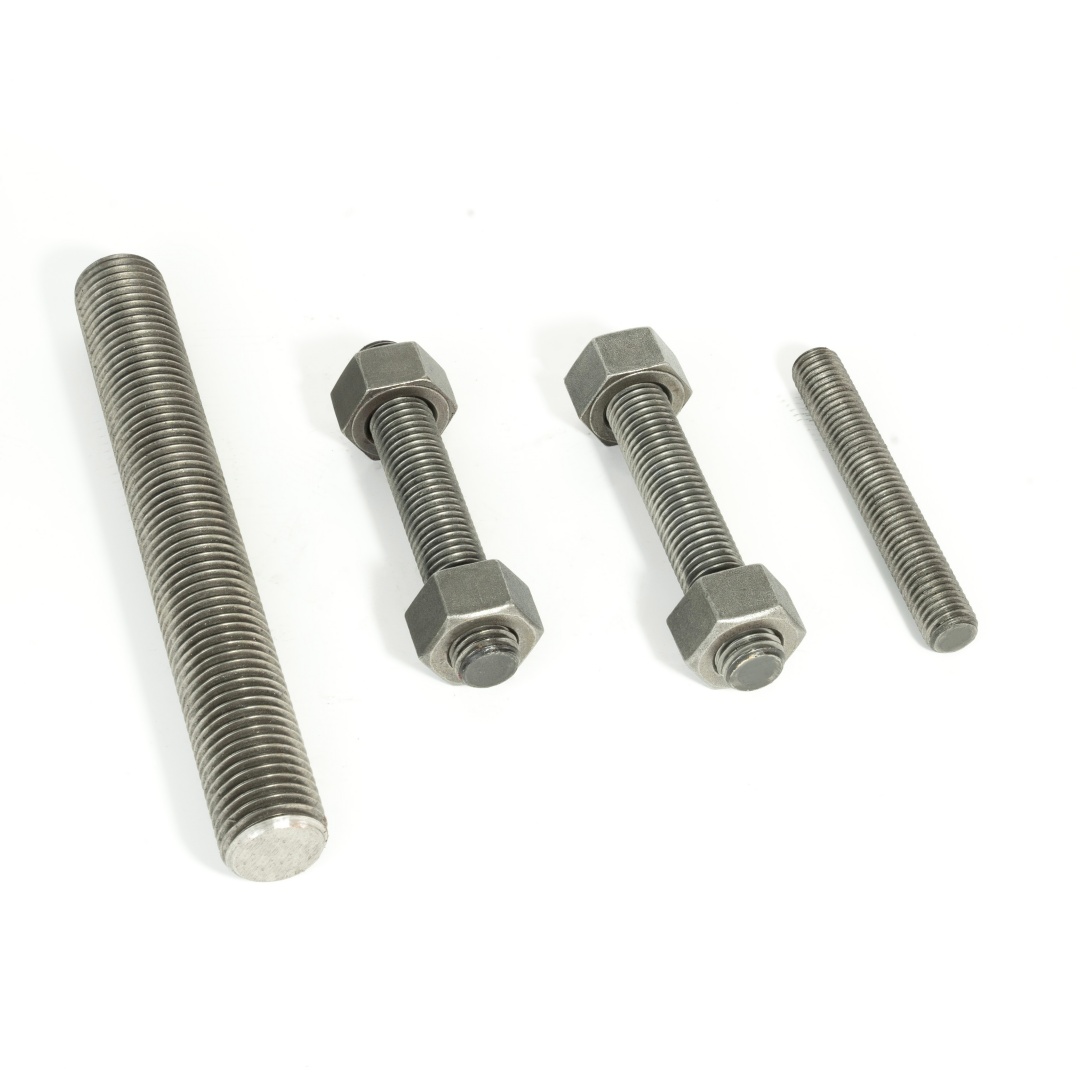
A stud bolt with nuts is an industrial fastener consisting of a threaded rod and matching nuts. Unlike standard bolts, which have a fixed head on one side, stud bolts do not have a forged head. Instead, they use threaded connections at both ends to secure components together.
A typical stud bolt with nuts assembly includes:
A threaded stud bolt
Two heavy hex nuts
Washers when required for load distribution
The stud bolt can be fully threaded or designed with specific threaded sections according to application requirements. Common industrial combinations include ASTM A193 B7 stud bolts paired with ASTM A194 2H heavy hex nuts, which are frequently used in high-pressure and high-temperature environments.
Because of their structure, stud bolt with nuts assemblies provide excellent flexibility during installation and maintenance, especially when connecting large components such as flanges, pressure equipment, and industrial machinery.
Although both stud bolts and regular bolts are designed to create strong mechanical connections, their structures and installation methods are different.
Feature | Stud Bolt with Nuts | Regular Bolt |
|---|---|---|
Structure | Headless threaded rod with nuts | Bolt with forged head and nut |
Tightening Method | Tightened through nuts on threaded ends | Tightened through bolt head or nut |
Load Distribution | Provides more uniform axial tension | More affected by friction during tightening |
Installation | Easier alignment for large components | Requires sufficient insertion clearance |
Maintenance | Protects internal threads from repeated wear | May damage tapped holes after repeated use |
Typical Applications | Pipelines, pressure vessels, heavy machinery | General structural connections |
The biggest difference is that a stud bolt with nuts separates the fastening function from the tightening process. The stud remains fixed while the nuts provide the required clamping force.
This design reduces installation difficulties and improves reliability in applications where consistent fastening performance is required.
A regular bolt creates tension by rotating the bolt head or nut, causing the bolt shaft to experience both torsional and axial stress during tightening.
A stud bolt with nuts works differently. The stud is installed into the threaded hole or positioned through the connection, and the nuts are tightened onto the exposed threads. This allows the stud to mainly experience axial tension rather than twisting stress.
The installation process usually includes:
Installing the stud bolt into the threaded connection or flange assembly.
Positioning the connected components correctly.
Installing washers and nuts onto the exposed threads.
Tightening the nuts according to the required torque sequence.
This fastening method provides more consistent clamping force across multiple connection points, which is especially important for applications such as pressure vessel flanges and pipeline systems.
Large industrial components, including pipeline flanges, engine heads, and heavy equipment housings, can be difficult to align during installation.
A stud bolt with nuts can act as a guide during assembly. Since the studs remain positioned in the connection area, workers can easily align components before tightening the nuts.
This helps reduce:
Installation difficulties
Risk of cross-threading
Component alignment problems
Potential damage during assembly
For large flange connections, this alignment advantage improves installation efficiency and reduces maintenance time.
Frequent assembly and disassembly can damage internal threads, especially in expensive components made from softer materials.
With regular bolts, repeated removal and installation may wear the threaded holes inside the main equipment structure. Once damaged, repairs often require additional machining or thread inserts.
A stud bolt with nuts reduces this risk because the stud remains installed while repeated tightening mainly occurs on the replaceable nuts. This helps protect the parent material and extends equipment service life.
Industrial joints often require stable and uniform clamping force to prevent leakage, vibration, or component movement.
A stud bolt with nuts assembly provides more stable fastening because the load is distributed through the threaded connection rather than concentrated around a bolt head.
This makes stud bolts suitable for:
High-pressure piping systems
Pressure vessels
Heat exchangers
Industrial machinery
Heavy-duty equipment
Uniform clamping performance is especially important where gasket sealing directly affects equipment safety and operation.
Different industrial applications require different stud bolt designs. The most common types include fully threaded stud bolts, tap-end studs, and double-end studs.
Fully threaded stud bolts feature continuous threads along the entire length.
Their advantages include:
Flexible installation length
Easy adjustment for different connection thicknesses
Suitable for various industrial applications
Fully threaded stud bolt with nuts assemblies are commonly used in:
Pipeline systems
Pressure vessels
Petrochemical equipment
Flange connections
Tap-end stud bolts have different thread designs on each side. One end is installed into a tapped hole, while the other end is used with a nut.
This design is commonly applied in:
Engine blocks
Pump housings
Heavy machinery
Blind-hole assemblies
Tap-end studs help protect internal threads from repeated removal and installation.
Double-end stud bolts have threaded sections on both ends with a center shank area.
They are often selected when:
Specific grip length is required
Accurate load distribution is needed
High-strength connections are involved
These stud bolts are commonly used in structural equipment and industrial machinery requiring stable fastening performance.
Due to their strength, flexibility, and maintenance advantages, stud bolt with nuts assemblies are widely used across multiple industries.
Pressure vessels require reliable flange connections that can maintain sealing performance under high pressure and temperature conditions.
Stud bolts provide stable clamping force and simplify maintenance during equipment inspections or repairs.
Oil, gas, chemical, and power industries often require fasteners that can withstand vibration, temperature changes, and repeated maintenance.
Stud bolt with nuts solutions are commonly selected for pipeline flange connections because of their reliable performance.
Industrial equipment often operates under high loads and vibration. Stud bolts help maintain connection strength while reducing damage to machine components.
High-performance engines and power systems often use stud bolts when stronger clamping performance is required compared with standard bolts.
Selecting a suitable stud bolt with nuts requires considering several important factors.
Different operating environments require different materials, including:
Carbon steel
Alloy steel
Stainless steel
Material selection should match temperature, pressure, corrosion resistance, and application requirements.
The correct diameter, thread specification, and length ensure proper engagement and sufficient load capacity.
Before selecting a stud bolt assembly, consider:
Working temperature
Pressure level
Chemical exposure
Maintenance frequency
Industry standards
For high-pressure applications, matching the stud bolt and nut materials correctly is essential for maintaining connection safety.
Common industrial combinations include:
Stud Grade | Matching Nut Grade | Application |
|---|---|---|
ASTM A193 B7 | ASTM A194 2H | High-pressure and high-temperature piping |
ASTM A193 B7M | ASTM A194 2HM | Sour gas and corrosion-sensitive environments |
ASTM A193 B8 | ASTM A194 8 | Stainless steel and chemical applications |
ASTM A320 L7 | ASTM A194 7 | Low-temperature applications |
Using compatible stud and nut grades ensures the fastening system maintains proper strength and reliability during operation.
Proper installation is important to achieve reliable fastening performance.
Incorrect tightening can cause uneven loading, gasket damage, or connection failure.
Recommended installation practices include:
Following correct torque sequences
Using calibrated tools
Applying suitable lubrication when required
Thread galling may occur when fasteners experience high loads or improper installation conditions.
To reduce this risk:
Use suitable anti-seize compounds
Select compatible materials
Avoid excessive tightening force
Proper installation helps maximize the service life and performance of the stud bolt assembly.
The differences between stud bolt with nuts and regular bolts mainly come from their structure, installation method, and performance characteristics.
Regular bolts are suitable for general fastening applications where simple installation and cost efficiency are priorities.
However, stud bolt with nuts provide significant advantages in demanding industrial environments through improved alignment, better thread protection, and more consistent clamping performance.
For pressure vessels, pipelines, heavy machinery, and high-temperature equipment, selecting the right stud bolt assembly can improve joint reliability, reduce maintenance requirements, and extend equipment service life.
When choosing industrial fasteners, consider application conditions, material requirements, connection design, and maintenance needs to ensure the most suitable fastening solution.
A stud bolt with nuts is a headless threaded fastener that uses nuts on threaded ends to secure components together. It is commonly used in industrial applications requiring strong and reliable connections.
The main difference is the structure. A stud bolt has no forged head and uses nuts for tightening, while a regular bolt uses a fixed head and nut combination.
Stud bolt with nuts provide stable clamping force and allow easier maintenance, making them suitable for pressure vessels, pipelines, and other high-pressure equipment.
Yes. ASTM A193 B7 stud bolts are commonly paired with ASTM A194 2H heavy hex nuts for industrial fastening applications.
In many applications, stud bolts can replace regular bolts if the connection design, load requirements, and installation conditions are suitable.
Selection depends on material grade, thread size, length, operating temperature, pressure rating, corrosion conditions, and applicable industry standards.
Washers are often recommended because they help distribute load and provide a more consistent tightening surface.
NGY Fastener supplies high-quality stud bolts, B7 stud bolt with nuts assemblies, and industrial fastening solutions designed for demanding applications. Contact us for customized fastening solutions based on your project requirements.


