
Views: 0 Author: Site Editor Publish Time: 2026-09-18 Origin: Site


Flange joint integrity relies entirely on clamping force. When high-pressure systems fail, fastener fatigue or improper tensioning usually causes the leak. Assembling heavy, large-diameter piping systems presents massive mechanical challenges on the job site. Aligning mating flanges, preventing gasket displacement, and achieving uniform load distribution using standard headed bolts carries high risk. You need a fastener designed specifically for symmetrical load distribution and high-stress environments. The stud bolt serves as the industry-standard solution for critical flange connections. This guide evaluates the mechanical advantages, selection criteria, and implementation risks for engineering and procurement teams tasked with maintaining leak-free infrastructure. We will cover material grades, tensioning mechanics, and field assembly tactics to ensure your next piping installation passes hydrotest without rework. Proper fastener selection prevents costly downtime and keeps hazardous materials contained.
Mechanical Superiority: A stud bolt acts as a tensioned spring, offering superior load distribution and elasticity compared to standard headed bolts, which is critical for maintaining gasket compression under pressure and temperature fluctuations.
Assembly Efficiency: In horizontal flange assemblies, studs function as pilot pins, allowing operators to hang and align heavy flanges and gaskets safely before applying torque, significantly reducing ergonomic strain and labor costs.
Specification Rigor: Selecting the correct flange stud bolt requires matching ASTM material grades (e.g., B7, B8, L7) to specific environmental conditions, pressure classes, and ASME standards.
Risk Mitigation: Proper implementation requires strict adherence to lubrication protocols, controlled tensioning methods, and verified Material Test Reports (MTRs) to prevent galling and ensure compliance.
Industrial piping systems operate under severe internal pressure, thermal cycling, and external vibration. These forces constantly attempt to push flange faces apart. To counteract this, fasteners must provide a relentless clamping force. A standard through-bolt features a forged head on one end and takes a nut on the other. While suitable for structural steel or low-pressure utility lines, the headed bolt introduces mechanical vulnerabilities in high-stress flange environments. The transition zone between the bolt shank and the forged head acts as a natural stress riser. Under extreme tension or fatigue loading, this specific area becomes highly susceptible to shear and failure.
A fully threaded stud operates on a completely different mechanical principle. By eliminating the forged head and utilizing nuts on both ends, the fastener transfers load entirely through its threaded engagement. This design fundamentally alters how stress distributes across the fastener body. It removes the weak point of the forged head, making the fastener vastly more reliable for critical pressure vessel and piping applications.
Engineers deploy different stud configurations based on the specific equipment design and maintenance requirements. Understanding these variations ensures proper joint assembly in the field.
Continuous Thread Studs: This represents the most common configuration for standard pipe flanges. The fastener is threaded from end to end. It passes through clearance holes in both mating flanges, secured by a nut on each side. This allows for equal thread engagement and symmetrical tensioning across the joint.
Tap-End Studs: Equipment housings, such as pump casings, compressor bodies, or heavy valve blocks, often feature tapped blind holes instead of through-holes. A tap-end stud features a short threaded section on one end designed to be permanently driven into the tapped hole. The unthreaded middle shank transitions to a longer threaded section on the exposed end, which accepts the mating flange and a single securing nut.
Double-End Studs: Similar to tap-end variants, these have threads on both ends with an unthreaded center shank. However, both threaded ends are designed to accept nuts. Pipefitters often use these in specialized high-pressure manifolds where a continuous thread might cause interference or galling issues during assembly.
Fastener Type | Stress Distribution | Tool Clearance Required | High-Pressure Suitability |
|---|---|---|---|
Standard Hex Bolt | Concentrated at head-to-shank fillet | High (Needs access to both sides) | Low to Medium |
Continuous Thread Stud | Uniform across threaded length | Low (Can tighten from one side) | Very High |
Tap-End Stud | Uniform on exposed end | Low (Nut only on one side) | High (Equipment specific) |
Bolts do not merely hold things together; they stretch. A fastener must elongate elastically to generate clamping force. Think of a tensioned fastener as a very stiff, heavy-duty spring. When you apply torque to the nuts, the stud stretches. This elastic stretch creates the compressive load that crushes the gasket and seals the flange.
Because a stud lacks a forged head, it provides a highly uniform stress distribution along its entire threaded length. Standard bolts concentrate stress at the head-to-shank fillet, which limits their elastic capability. Studs eliminate this localized stress concentration. When thermal expansion causes the flange to grow, or internal pressure spikes attempt to separate the joint, the elongated stud absorbs the movement dynamically. It maintains the necessary compression on the gasket without yielding or suffering fatigue failure.
Achieving a leak-free seal requires perfectly even pressure across the entire gasket face. Tightening nuts on both ends of a stud allows for highly precise control over this clamping force. When a technician torques a standard bolt, turning the bolt head against the flange surface generates significant torsional friction. This friction absorbs a large portion of the applied torque, leading to inaccurate tensioning and uneven gasket compression.
With a stud, the fastener body remains stationary. The technician applies torque solely to the nuts. This eliminates the unpredictable torsional friction of a rotating bolt head. The result is a much more accurate translation of applied torque into actual bolt stretch and clamping force. Symmetrical tensioning prevents flange distortion and ensures the gasket receives uniform compression across its entire surface area.
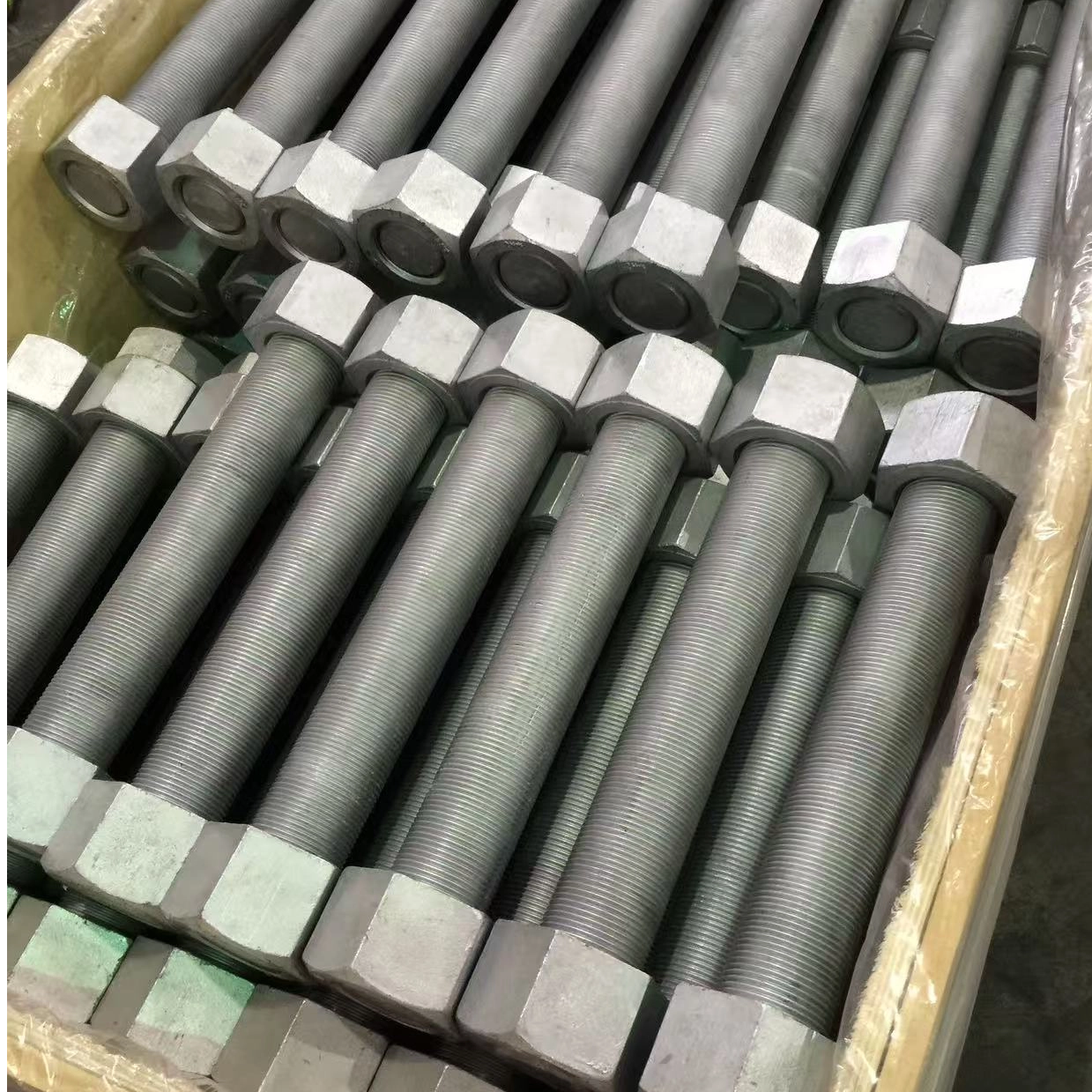
Field assembly of heavy industrial components is physically demanding and hazardous. Mating heavy pipelines, massive split-case pumps, or industrial exhaust systems requires precise alignment. Attempting this with standard bolts creates severe logistical problems. Operators would have to manually support tons of steel, align the bolt holes perfectly, keep the fragile gasket centered, and simultaneously thread a bolt through the assembly.
Studs solve this problem by acting as built-in pilot pins. The assembly process becomes much safer and more efficient. Here is the standard field procedure pipefitters use to leverage this advantage:
Insert the lower half of the studs into the stationary flange face and secure them loosely with nuts on the back side.
Place the gasket against the flange face, allowing it to rest securely in the cradle created by the protruding lower studs.
Hoist the mating flange into position using rigging equipment.
Guide the mating flange onto the protruding studs. The studs automatically align the heavy component, acting as guide rails.
Install the remaining upper studs and hand-tighten all nuts before beginning the formal torque sequence.
This method drastically reduces ergonomic strain, cuts labor hours, and prevents catastrophic hand-crush injuries during rigging operations.
Industrial facility layouts rarely prioritize maintenance access. Compact process skids, complex hydraulic manifolds, and tightly packed pipe racks severely restrict tool clearance. Standard bolts require access to both sides of the flange simultaneously. A mechanic needs one wrench to hold the head and another to turn the nut.
Studs offer excellent flexibility in tight spaces. Because they utilize nuts on both ends, technicians can choose which side of the flange offers better tool access. If one side is blocked by a structural beam or adjacent pipe, the operator simply holds the inaccessible nut stationary and applies the torque wrench to the exposed side. Furthermore, studs are fully compatible with hydraulic bolt tensioners. These tools require exposed threads above the nut to grip and pull the fastener. Standard bolts cannot be hydraulically tensioned in this manner.
Industrial environments destroy fasteners. Saltwater spray, chemical exposure, and constant thermal cycling cause threads to corrode and seize. When a standard bolt seizes inside a flange clearance hole, removing it often requires destructive methods. Mechanics must drill it out or use heavy impact tools, which can damage the flange face or the internal bore.
Studs mitigate disassembly risks during plant turnarounds. If a nut seizes on a stud due to rust or galling, the technician can simply cut the nut off using a nut splitter or cutting torch. The stud itself remains stationary, protecting the flange body from damage. Once the tension is relieved, the stud can usually be driven out with a punch. In tap-end applications, if the exposed threads are damaged, the stud can be extracted using a stud puller without requiring the expensive equipment housing to be re-machined.
In large-diameter, high-pressure piping networks, threaded fittings become entirely impractical. Threaded pipe joints are prone to leakage under high vibration and cannot handle the immense hoop stresses of large-bore systems. Flanged connections secured by high-strength studs are mandatory for maintaining seal integrity.
The specification process begins with the ASME B16.5 flange pressure class. Flanges are categorized from Class 150# up to Class 2500#. As the pressure class increases, the flange thickness grows, requiring longer fasteners with significantly higher yield strengths. A Class 150# flange might operate safely with standard carbon steel fasteners, but a Class 1500# flange demands high-tensile alloy steel to prevent the internal pressure from stretching the fasteners beyond their elastic limit.
ASME Flange Class | Typical Operating Pressure Range | Fastener Requirement Level |
|---|---|---|
Class 150# | Low (Up to 285 psi) | Standard Tensile Strength |
Class 300# | Medium (Up to 740 psi) | Medium to High Tensile Strength |
Class 600# | High (Up to 1480 psi) | High Tensile Alloy Steel |
Class 1500#+ | Extreme (Up to 3705 psi) | Ultra-High Tensile, Strict MTRs |
Temperature fluctuations further dictate selection. High-temperature environments cause metals to expand and lose tensile strength. If the fastener expands faster than the flange, clamping force drops, and the joint leaks. Conversely, cryogenic environments cause standard carbon steel to become brittle and shatter under impact. You must match the thermal expansion coefficient and temperature rating of the fastener to the operating environment.
Selecting the correct material grade is the most critical decision in fastener procurement. The ASTM A193 and A320 standards govern alloy and stainless steel bolting materials for high-temperature and low-temperature service, respectively. Using an incorrect grade guarantees joint failure.
ASTM Grade | Material Composition | Primary Application | Temperature Profile |
|---|---|---|---|
A193 Grade B7 | Chromium-Molybdenum Steel | Standard Oil & Gas, High Pressure | High Temp (Up to 400°C / 750°F) |
A193 Grade B8 | 304 Stainless Steel | Corrosive Environments, Chemical Plants | Extreme Temp (-200°C to 800°C) |
A193 Grade B8M | 316 Stainless Steel | Marine, High Chloride Environments | Extreme Temp (-200°C to 800°C) |
A320 Grade L7 | Alloy Steel (Charpy Impact Tested) | Cryogenic, LNG Facilities | Low Temp (Down to -101°C / -150°F) |
The standard Flange Stud Bolt for general petrochemical use is the B7. It offers exceptional tensile strength and handles high heat effectively. For highly corrosive chemical processing, B8 or B8M stainless steel is required, though engineers must account for their lower yield strength compared to B7. For liquefied natural gas (LNG) or arctic operations, the L7 grade is mandatory, as it undergoes rigorous Charpy impact testing to ensure it will not suffer brittle fracture at sub-zero temperatures.
Bare metal fasteners rust rapidly in industrial atmospheres. Applying protective coatings extends fastener life but introduces complex variables into the assembly process. You must balance corrosion resistance against dimensional tolerances and friction coefficients.
Hot-Dip Galvanizing (HDG): Provides excellent, thick zinc protection for harsh outdoor environments. However, the thick coating alters thread dimensions. Nuts must be over-tapped to fit onto HDG studs, which slightly reduces thread engagement strength.
PTFE (Teflon) Coating: Extremely popular in offshore and chemical applications. PTFE offers superior chemical resistance and acts as a dry lubricant. This drastically lowers the friction coefficient during tightening.
Zinc Plating: A thin, electroplated layer suitable for mild, indoor, or low-corrosion environments. It does not alter thread dimensions significantly but offers limited lifespan in harsh conditions.
The most critical trade-off involves the "nut factor" or K-factor. Coatings change how slippery the threads are. If you apply the same torque to a PTFE-coated stud as you would to a bare steel stud, the PTFE stud will stretch significantly more because less torque is wasted on friction. Failing to adjust torque calculations for the specific coating will result in severe over-tensioning and potential fastener yield.
Galling, or cold welding, is a severe risk when assembling threaded fasteners, particularly with stainless steel (B8/B8M) or titanium grades. When stainless steel threads rub against each other under heavy load, the protective oxide layer scrapes off. The raw metal surfaces generate immense localized heat through friction, causing the threads to literally weld together on a microscopic level. Once a fastener galls, it seizes completely and must be cut off.
Mitigation requires strict field protocols. Technicians must apply a high-quality anti-seize lubricant to all thread surfaces and nut faces prior to assembly. Furthermore, installation speed must be controlled. Using high-speed pneumatic impact wrenches generates rapid heat and virtually guarantees galling in stainless steel. Nuts should be run down manually or with low-RPM tools.
Anti-Seize Type | Best Application | Temperature Limit |
|---|---|---|
Copper-Based | General purpose, carbon steel | Up to 1800°F (982°C) |
Nickel-Based | Stainless steel, chemical plants | Up to 2400°F (1315°C) |
Moly-Based (MoS2) | High pressure, extreme loads | Up to 750°F (399°C) |
Applying too much clamping force is just as dangerous as applying too little. If a technician exceeds the yield strength of the stud, the metal undergoes plastic deformation. It stretches permanently and loses its spring effect. The joint will inevitably leak as soon as pressure or temperature fluctuates. Additionally, excessive force will crush the gasket, destroying its sealing matrix and extruding it into the pipe bore.
To mitigate this, facilities must transition away from uncontrolled tightening methods like striking wrenches or uncalibrated impact guns. Mechanics must follow a strict star-pattern tightening sequence to ensure even load distribution. The standard procedure involves tightening in stages:
Hand tighten all nuts to ensure the flange faces are parallel.
Tighten all studs to 30% of the final torque value using a crisscross star pattern.
Tighten all studs to 60% of the final torque value using the same pattern.
Tighten all studs to 100% of the final torque value.
Perform a final circular pass at 100% torque to ensure no studs relaxed during the sequence.
For critical joints or flanges larger than 10 inches, engineering teams should specify hydraulic bolt tensioning. Unlike torque wrenches that fight friction, hydraulic tensioners grab the exposed threads and pull the stud axially to the exact required load before the nut is seated. This ensures pure axial loading and perfectly uniform gasket compression.
The global fastener supply chain is vulnerable to counterfeit materials. Installing substandard steel in a high-pressure pipeline is a massive liability. A fastener that looks identical to a B7 grade but lacks the required heat treatment will fail catastrophically under load.
Procurement teams must enforce strict traceability. Every batch of fasteners must arrive with verified Material Test Reports (MTRs). These documents trace the steel from the original melt at the mill through the final heat treatment and threading process, proving chemical composition and physical yield strength. Additionally, field inspectors must visually verify the stamped grade identifiers on the ends of the studs (e.g., "B7" or "L7") and the manufacturer's identification mark before assembly begins.
Audit your current piping specifications to ensure fastener grades match the latest process temperatures and pressures.
Review your procurement protocols to mandate full MTR compliance for all critical-service fasteners.
Update your maintenance procedures to include specific torque values adjusted for the exact thread coatings and lubricants used in your facility.
Transition to hydraulic bolt tensioning for large-diameter or high-pressure flanges to eliminate friction variables and prevent gasket crushing.
A: A standard machine bolt has a forged head on one end and takes a nut on the other, which concentrates stress at the head-to-shank transition. A stud lacks a forged head and uses nuts on both ends. This dual-nut configuration provides uniform stress distribution and eliminates torsional friction.
A: Exhaust manifolds are heavy and located in tight spaces. Studs act as pilot pins, allowing mechanics to hang the heavy manifold securely during alignment without manually supporting the weight. Additionally, if a nut seizes due to exhaust heat corrosion, it can be cut off without damaging the manifold threads.
A: The standard measurement method depends on the specification. For ASME/ANSI flanges, continuous thread studs are typically measured end-to-end, including the chamfers. The total length must account for the thickness of both flanges, the compressed gasket, two nuts, and enough extra length to leave threads exposed on each end.
A: The "B7" stamp indicates compliance with ASTM A193 Grade B7. This specifies a chromium-molybdenum alloy steel that has been quenched and tempered. It guarantees high tensile strength and serves as the industry standard for high-temperature, high-pressure applications in the oil, gas, and petrochemical sectors.
A: Engineering consensus discourages reusing fasteners in high-pressure or critical applications. Once torqued, studs undergo stress and potential plastic deformation or fatigue. Reusing them risks unpredictable clamping force and joint failure. They may be reused in low-stress utility systems only if thoroughly inspected for thread damage and elongation.
A: Industry standards dictate that a properly installed stud should have 1 to 3 complete threads exposed beyond the face of the nut. This ensures full thread engagement through the nut body. Excessive protrusion increases the risk of corrosion on the exposed threads, making future disassembly difficult.


