
Views: 0 Author: Site Editor Publish Time: 2026-05-01 Origin: Site


Bridge and viaduct construction demands zero-tolerance for fastener failure. Critical structural joints endure relentless dynamic loads. They also face severe wind shear and highly corrosive environmental conditions. Using standard-grade fasteners or mismatched materials invites disaster. You risk catastrophic joint fatigue, unacceptable localized stress—often called pull-through—and exorbitant long-term maintenance demands.
This explains why the carbon steel heavy hex nut remains the undisputed standard for high-stakes structural engineering. It delivers unmatched structural integrity under extreme tension. We present a technical and economic evaluation below. You will see how these specific fasteners satisfy the rigorous demands of civil infrastructure. This guide supports procurement engineers in accurate material selection and strict compliance verification.
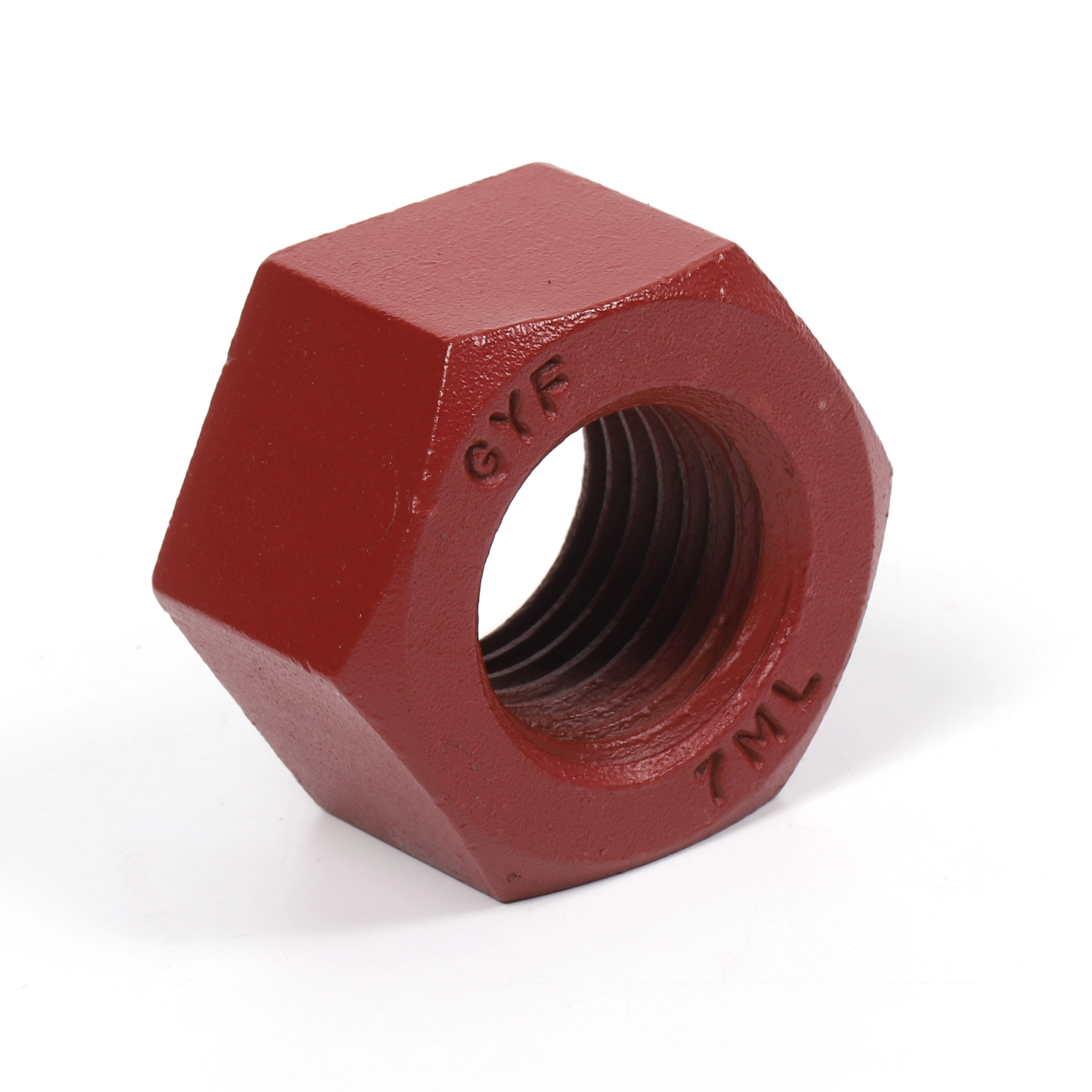
Heavy vs. Standard: Heavy hex nuts provide a wider bearing surface and extended thread engagement, critical for distributing extreme tension loads in structural steel framing.
Material Economics: Carbon steel delivers the highest yield strength-to-cost ratio for massive span projects, requiring specific protective coatings (like Hot-Dip Galvanization) for long-term viability.
Installation Efficiency: The geometric 60-degree wrenching angle reduces assembly time and prevents slippage in confined, high-altitude viaduct workstations.
Compliance: Fully aligns with primary bridge infrastructure standards, natively pairing with high-strength structural bolts (e.g., ASTM F3125, A325, A490).
Physical dimensions directly translate to structural integrity in bridge construction. Engineers cannot treat all hex profiles equally. We must evaluate how extra mass and wider flats prevent joint failure.
Dimensional realities dictate performance. Heavy hex nuts are noticeably thicker than standard hex nuts. Increased thickness provides substantially more thread contact area inside the joint. High-tension joints rely on this extended engagement to hold firm. It drastically reduces the risk of thread stripping under extreme tension. When a bridge girder flexes, the clamping force remains intact because the threads share the load over a larger vertical plane.
Never substitute a standard structural nut in a heavy-duty joint. Standard profiles lack the internal thread count needed. They will strip under heavy freight vibrations.
Heavy hex designs feature wider flats across their geometry. This expanded footprint acts as a built-in force distributor. When workers torque the bolt, the nut presses against the splice plate. A larger bearing surface distributes clamping force evenly across bridge girders.
This even distribution prevents localized crushing. It stops the nut from tearing through softer adjoining materials. We call this material pull-through. Preventing pull-through preserves the lifespan of expensive steel framing.
Feature | Standard Hex Nut | Heavy Hex Nut |
|---|---|---|
Width Across Flats | Narrower | Significantly wider |
Overall Thickness | Standard profile | Thicker profile |
Thread Engagement Area | Moderate | Maximized |
Primary Application | Light to medium machinery | Bridge framing, viaducts, heavy infrastructure |
We must evaluate material behavior against real-world bridge conditions. Infrastructure environments punish weak metals. A reliable fastener must handle varied stress types while surviving harsh weather.
Bridge joints endure constant dynamic loads. Moving traffic and heavy freight slam into the structure daily. These dynamic forces operate alongside massive static loads generated by the bridge structure itself.
Specific carbon steel compositions—such as medium-carbon or heat-treated alloyed variations—resist deformation brilliantly. They withstand severe cyclic vibration without loosening. A heavy hex nut made of high-grade carbon steel absorbs these shocks. It maintains necessary torque values long after initial installation. High carbon content increases material hardness. This directly translates to superior yield strength.
We address the inherent risk transparently. Bare carbon steel is highly susceptible to rust in marine or wet environments. Oxygen and moisture degrade unprotected steel quickly.
However, carbon steel boasts an uncompromised receptivity to industrial anti-corrosion coatings. Engineers frequently apply sacrificial and barrier coatings. Hot-Dip Galvanization (HDG), zinc plating, and Dacromet bond beautifully to carbon steel. These metallurgically bonded layers act as sacrificial anodes. They allow engineers to achieve stainless-steel-like durability at a fraction of the cost. You get the raw strength of carbon steel combined with superior weather resistance.
Large infrastructure projects require bridging the gap between engineering needs and budget realities. Procurement teams must source materials efficiently.
Consider the massive scale of a modern viaduct. These projects require hundreds of thousands of fastening points. Carbon steel provides a highly favorable strength-to-cost ratio compared to premium alternatives.
Titanium: Offers incredible strength and low weight. However, the unit price makes it impossible to scale for a ten-mile bridge project.
316L Stainless Steel: Provides excellent natural corrosion resistance. Yet, it costs significantly more than coated carbon steel. It also lacks the ultra-high yield strength of hardened carbon alloys.
Carbon Steel: Delivers necessary structural rigidity. It scales perfectly across mega-projects. It prevents unviable budget bloat during procurement phases.
Procurement teams prioritize carbon steel because it satisfies strict structural codes affordably. You secure the framework without draining the project budget.
We must focus on the contractor and maintenance crew experience. A fastener might look perfect on a blueprint. It must also perform well in the hands of a steelworker suspended fifty feet in the air.
The six-sided design provides a critical operational advantage. Workers only need a 60-degree rotation to secure the nut. Square alternatives demand a 90-degree rotation.
This impact is massive on site. Fastening takes place in tight structural nodes or suspended viaduct platforms. Wrenches often hit adjacent girders. The 60-degree wrenching angle reduces assembly time. It allows faster, safer torquing in confined spaces. It also prevents dangerous wrench slippage. Crews finish joints quicker, reducing costly labor hours.
Global standardization ensures reliable procurement. It also guarantees ease of maintenance down the line. This remains a primary benefit for QA and compliance officers.
These fasteners natively pair with heavy structural bolts. They align seamlessly with ASTM A325 and ASTM A490 specifications. Standardized testing protocols exist worldwide for these exact combinations. When inspectors review a bridge, they recognize these standard assemblies immediately. Future maintenance crews can easily source replacement parts decades after the initial build.
Procurement requires strict parameters. Use these actionable criteria for shortlisting and purchasing fasteners for structural applications.
Grade Matching: You must ensure the nut grade matches or exceeds the bolt grade. Never pair a weak nut with a high-strength bolt. Specify ASTM A563 Grade DH or ASTM A194 Grade 2H for critical structural joints.
Thread Fit Compatibility: Account for coating thickness. If using Hot-Dip Galvanized nuts, specify overtapped threads. The mating heavy hex bolt carries a thick zinc layer. Overtapped nut threads accommodate this zinc layer without seizing during assembly.
QA and Traceability: Buyers must demand mill test reports (MTRs). Traceability ensures safety. MTRs verify exact carbon content and yield strength. They prove compliance with ASTM, DIN, and EN mandates.
Always store coated fasteners in dry, climate-controlled environments before installation. Even galvanized parts can develop "white rust" if left soaking in stagnant water on a job site.
The carbon steel heavy hex nut represents the optimal intersection of geometric strength, material scalability, and regulatory compliance. Its wider bearing surface and extended threads secure viaducts against dynamic forces. The material yields tremendous strength affordably.
Evaluate your specific environmental exposure carefully before purchasing. A coastal viaduct requires different secondary coatings than an inland overpass. Always select the correct barrier coating. Never compromise on the base carbon steel material.
Consult with your fastening engineers early in the design phase. Download a structural standard compatibility chart to verify grade matching. Submit a project RFQ today to secure bulk carbon steel fasteners for your next infrastructure build.
A: Dimensional specs dictate the difference. Heavy hex nuts are wider across the flats and slightly thicker than standard versions. This larger geometry provides a greater bearing surface. It ensures stronger thread engagement for heavy-duty structural applications, preventing pull-through.
A: The primary standard is ASTM A563, the Standard Specification for Carbon and Alloy Steel Nuts. Engineers also specify ASTM A194, specifically Grade 2H. Grade 2H handles high-pressure and high-temperature service, making it easily adaptable for heavy structural bridge use.
A: You apply industrial coatings. Hot-Dip Galvanization (HDG) serves as the most common solution. It provides a tough, metallurgically bonded zinc layer. This layer acts as a sacrificial anode, actively protecting the steel against harsh weathering and moisture.


